Why Sequencing Matters More Than You Think
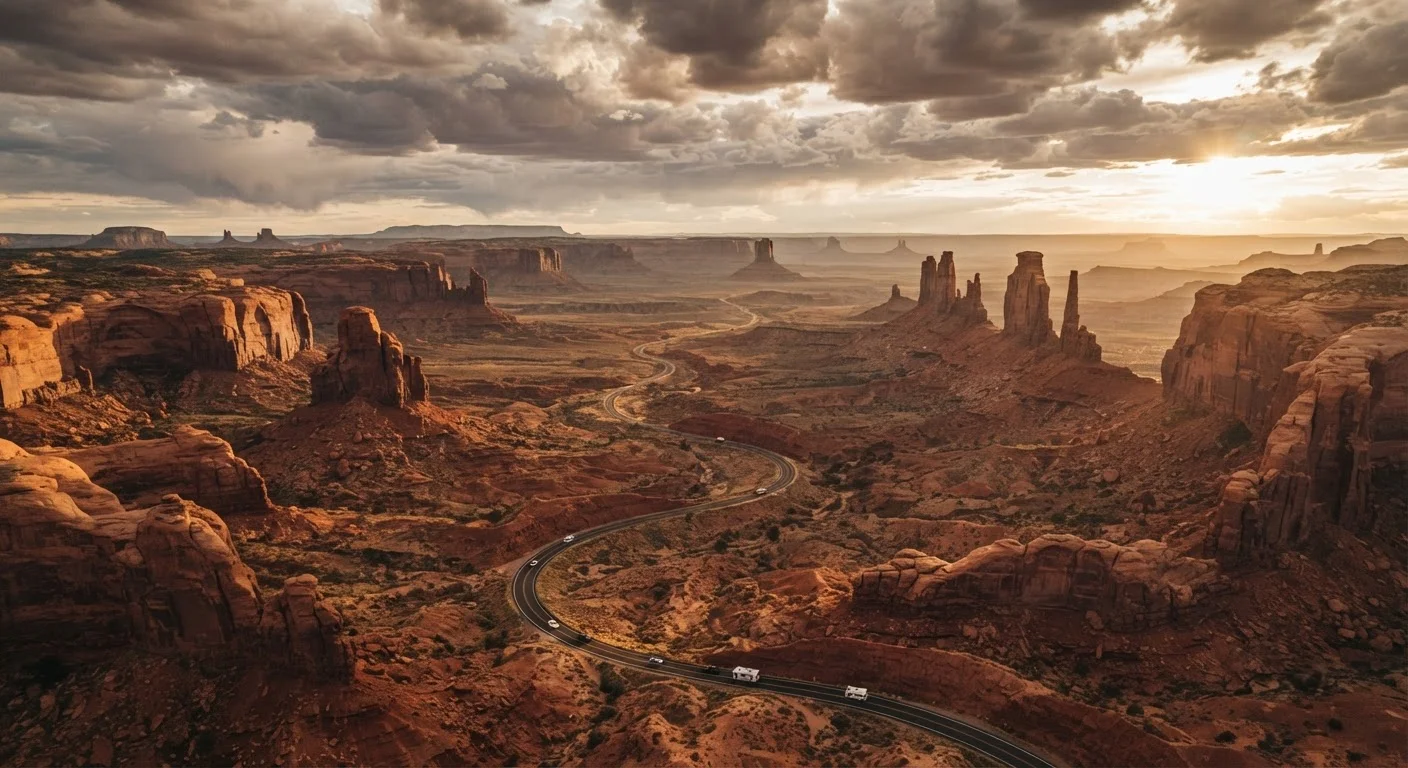
Pull up a map of the American Southwest's major national parks and something becomes immediately clear: they're clustered within a surprisingly compact arc stretching from southern Utah into northern Arizona. Zion, Bryce Canyon, Capitol Reef, Arches, Canyonlands, and the Grand Canyon all sit within roughly 500 miles of each other. That's both an incredible gift for road trippers and a quiet trap for anyone who plans their stops in bucket-list order rather than geographic order.
Drive from Zion to Arches, then down to the Grand Canyon, and back to Las Vegas, and you've added hundreds of miles of redundant desert highway - hours that could have been spent on the trail. A well-sequenced loop that moves in one continuous direction isn't just efficient; it's noticeably less exhausting, and it lets you arrive at each park fresher and with more time to actually explore. See how seasoned planners think about common planning traps that derail even well-intentioned itineraries before you finalize anything.
Build in a Buffer Day Near the Middle
Somewhere around day four or five, leave a half-day unscheduled. Unexpected weather, a trail you want to revisit, or simple fatigue can derail a packed Southwest itinerary fast. A buffer day near Page, Arizona - centrally located between several parks - gives you flexibility without costing much driving time.
What to Expect on the Road Between Parks
The drives connecting these parks are part of the experience - not lost time. Highway 12 between Bryce Canyon and Capitol Reef is frequently cited as one of the most dramatic scenic byways in the United States, cresting ridgelines with canyon views dropping away on both sides. Highway 191 through Moab connects Arches and Canyonlands in a straightforward corridor lined with gear shops and restaurants that have become a full outdoor-recreation culture unto themselves.
Expect driving days of roughly two to three hours between major stops. That's enough to feel like meaningful progress without surrendering the whole day. Where it gets more demanding is any southward push toward the Grand Canyon from Moab - that's a substantial drive regardless of routing - so position it as a deliberate end-of-loop anchor rather than a midpoint detour. For readers still deciding how they want to structure this kind of trip overall, our Trip Planning hub covers everything from packing strategy to navigating unfamiliar destinations.
Permits and Reservations Fill Up Fast
Several Southwest parks - including Zion, Arches, and the Wave at Vermilion Cliffs - now require timed entry permits or shuttle reservations during peak season. These can sell out weeks or even months in advance. Always verify current permit requirements directly with the National Park Service (nps.gov) well before your trip, and book as early as systems allow.