Why Venture Beyond the French Quarter
Bourbon Street delivers exactly what it promises - loud, crowded, and unapologetically touristy. But New Orleans is one of the most culturally layered cities in America, and its real texture lives in the neighborhoods that most visitors never reach. Whether you have two days or two weeks, understanding what each district actually offers helps you spend your time where it genuinely counts.
| Tremé Distance from French Quarter | Under 10-minute walk |
| Frenchmen Street Live Music | Nightly, most venues no cover |
| City Park Size | 1,300+ acres |
| Primary Transit Options | Streetcar lines, rideshare, walking |
| Best Bywater Access | 15-min walk along the riverfront from the Quarter |
| Cemetery Visit Recommendation | Use a licensed tour guide |
The neighborhoods below are walkable from one another in some cases, but a combination of the Streetcar lines, rideshares, and a sturdy pair of shoes will serve you well. Always verify current hours and seasonal closures before visiting any specific venue - the city's schedule runs on its own rhythm.
Tremé: America's Oldest African American Neighborhood
Just steps from the French Quarter but worlds apart in feel, Tremé is widely recognized as the oldest African American neighborhood in the United States and the birthplace of jazz as a living, community tradition. Congo Square - where enslaved people gathered on Sundays to maintain African musical and cultural practices - anchors the neighborhood's identity and sits within Louis Armstrong Park.
What travelers actually find here: a quieter pace, beautiful Creole cottages, the Backstreet Cultural Museum (which documents Mardi Gras Indian traditions and jazz funerals), and second-line parades that happen on a semi-regular schedule throughout the year. This is not a polished tourist corridor - it's a working neighborhood, and visitors should approach it with respect and genuine curiosity rather than as a backdrop for photos.
Bywater & Marigny: Creatives, Music, and Local Eats
Faubourg Marigny and its downriver neighbor Bywater attract a lively mix of artists, longtime locals, and travelers who know to ask around. Frenchmen Street in the Marigny is the live music corridor most locals actually recommend - a concentrated stretch of clubs where you can hear jazz, funk, and blues any night of the week without a cover charge at the door of many spots (though tipping musicians is strongly encouraged).
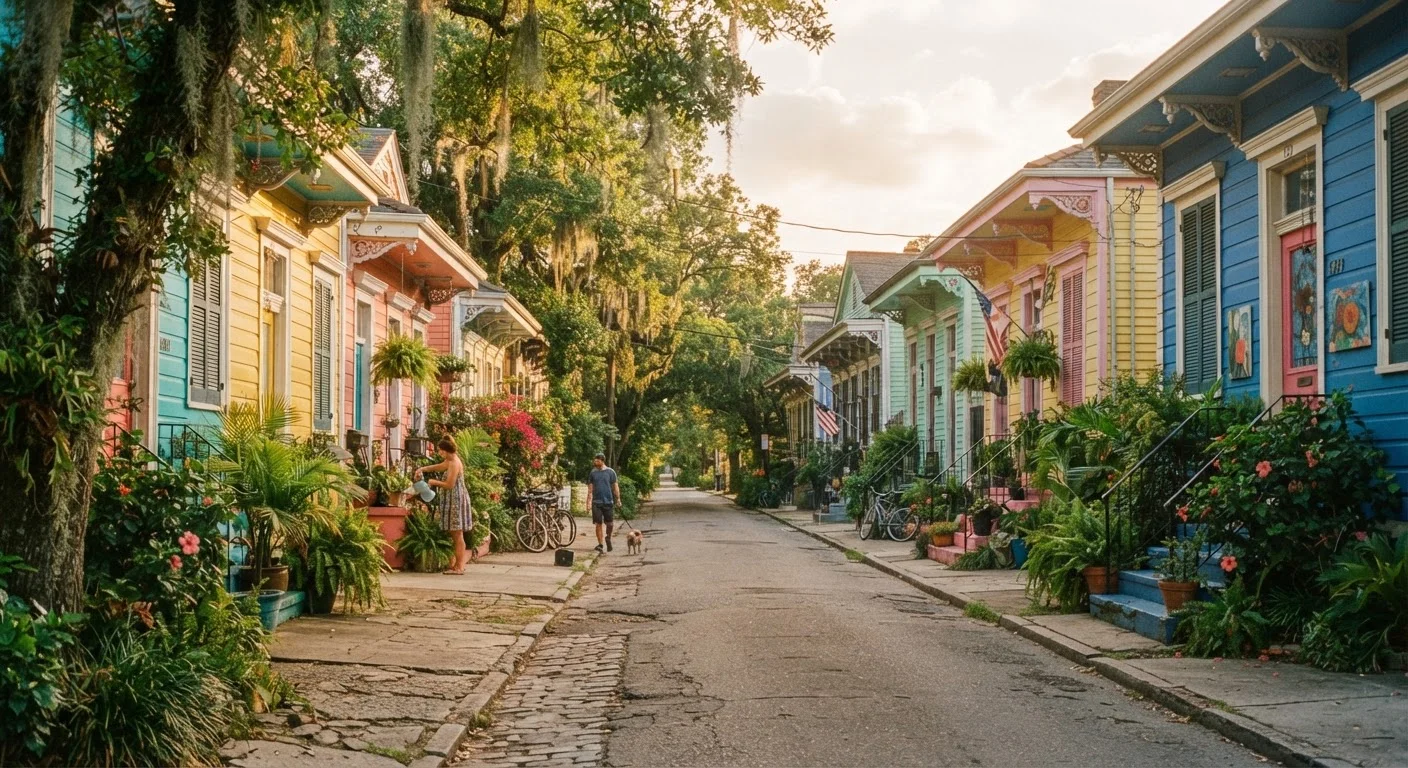
Bywater has a distinctly bohemian feel, with colorful shotgun houses, independent coffee shops, and restaurants that punch well above their square footage. It's also extremely walkable from the French Quarter - roughly a 15-minute stroll along the riverfront. The area is generally safe for pedestrians during the day and evening, though as in any urban neighborhood, staying aware of your surroundings after midnight is sensible.
Shotgun House
A narrow rectangular home - typically one room wide - where rooms are arranged in a straight line front to back with no hallways. They're ubiquitous in New Orleans neighborhoods and reflect 19th-century Creole building traditions.
Second Line Parade
A New Orleans street parade tradition rooted in jazz funeral customs, featuring a brass band and a procession of dancers. The 'second line' refers to the community members who follow the main parade, dancing and waving handkerchiefs.
Creole Cottage
A traditional Louisiana architectural style featuring a low-pitched roof, front rooms opening to the street, and a design that reflects the blended French, Spanish, and African cultural heritage of New Orleans.
Faubourg
A French term meaning 'suburb' or 'neighborhood,' used in New Orleans to describe the historic residential districts that grew up just outside the original French Quarter boundaries.
Mid-City: Cemeteries, City Park, and Everyday NOLA
Mid-City is the neighborhood New Orleans residents actually live in - grocery stores, neighborhood bars, and families on porches. Its two anchor destinations are worth the trip on their own. City Park covers over 1,300 acres and includes the New Orleans Museum of Art, the Besthoff Sculpture Garden, botanical gardens, and lagoons ideal for paddle boating. It's genuinely one of the great urban parks in America and often uncrowded compared to the Quarter.
The city's famous above-ground cemeteries - particularly St. Louis Cemetery No. 3 in Mid-City - offer a compelling window into New Orleans burial traditions shaped by the city's high water table and Catholic heritage. Visiting with a licensed guide is recommended both for historical context and practical navigation inside older cemetery walls. The Canal Street streetcar line connects Mid-City directly to downtown, making it an easy half-day excursion.