The Light You Actually Get
Step outside in Reykjavik on a December afternoon at 2 p.m. and the sky looks like a photographer staged the most gorgeous sunset you have ever seen - except it has looked that way since noon and will continue until the light quietly fades out by 4 p.m. That is winter daylight in Iceland: not absent, but compressed into a moody, amber-blue window that barely has time to say hello before disappearing again.
This quality of light is one of the most genuinely surprising things first-time winter visitors report. The sun never climbs high enough to cast hard shadows. Instead, everything glows softly from a low angle for a few hours - hills, lava fields, harbor water. Photographers from around the world time entire trips around it. The catch is that you have to structure your outdoor activities tightly around that narrow window, or you will find yourself exploring in the dark - which, honestly, has its own appeal in Iceland.
Daylight Varies Across Iceland
Reykjavik, in the southwest, receives slightly more winter daylight than northern towns like Akureyri. If you plan to travel to northern Iceland in winter, expect an even shorter light window. Check local sunrise and sunset times for each specific location you plan to visit, as the difference across the island can be meaningful for scheduling outdoor activities.
The Northern Lights: Reality vs. Expectation
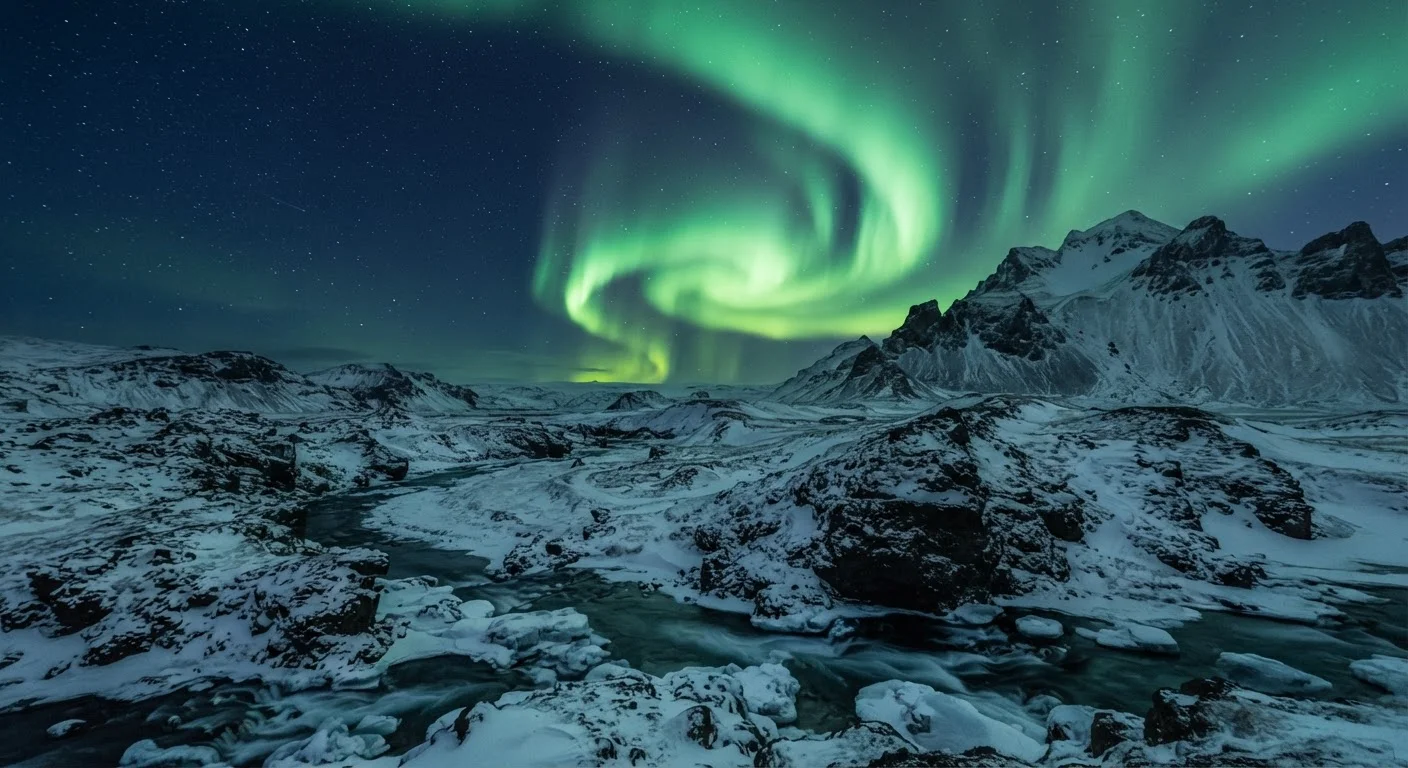
Long dark nights are the trade-off winter gives you, and the biggest payoff is aurora season. The northern lights are visible in Iceland from roughly late September through late March, with the darkest months - November through January - offering the longest windows of darkness. That said, actually seeing the aurora requires three things aligning: solar activity, clear skies, and distance from light pollution.
Cloud cover is Iceland's biggest obstacle. The weather is famously changeable, and a forecast can flip in an hour. Experienced Iceland travelers recommend staying flexible with your schedule, signing up for aurora alert services, and being willing to drive away from city lights on a moment's notice when conditions look promising. When the lights do appear - especially a strong display with greens, purples, and whites rippling overhead - the experience is widely described as one of the most striking things a traveler can witness.
4-5 hrs
Daylight hours in Reykjavik in December
Iceland's Met Office confirms that around the winter solstice, the capital receives roughly four to five hours of diffuse daylight.
~8 months
Aurora viewing season in Iceland
The aurora borealis is potentially visible from Iceland for approximately eight months of the year when nights are dark enough, peaking in winter.
64°N
Approximate latitude of Reykjavik
This latitude - just below the Arctic Circle at 66.5°N - is what drives Iceland's extreme seasonal light variation.
Roads, Safety, and Getting Around
Winter driving in Iceland is not for the unprepared. The famous Ring Road (Route 1) remains largely open in winter, but interior highland roads - the F-roads - are closed entirely and should never be attempted. Black ice forms quickly, winds can be ferocious, and mountain passes sometimes close without much warning. The Icelandic Road and Coastal Administration (road.is) and the national emergency awareness site safetravel.is both provide real-time road conditions and travel alerts. Checking these before every drive is a genuine safety habit, not optional fine print.
Many travelers find that basing yourself in Reykjavik and taking day tours - led by operators who know current conditions - is a practical way to see the landscape safely. Geothermal pools, both well-known and lesser-visited, are accessible year-round and offer a uniquely Icelandic way to warm up after a cold outdoor excursion.
What the Darkness Actually Feels Like
Ask winter Iceland veterans and you will get a range of answers - and that range is honest. Some travelers find the compressed daylight genuinely disorienting at first, especially when jet lag is layered on top. Others fall immediately into the rhythm of it, leaning into Reykjavik's cozy café and bar scene, the steam rising from geothermal pools at dusk, the way candlelight fills restaurants by 4 p.m.
Icelanders have a cultural orientation toward this season rather than against it. The concept of hygge (the Scandinavian idea of coziness and convivial warmth) has an Icelandic cousin in how locals approach winter: good food, hot water, community. For travelers who come expecting the darkness to be oppressive, the reality is often more nuanced and, for many, unexpectedly beautiful. The key is arriving with calibrated expectations and a schedule that treats the dark as part of the experience rather than an obstacle to it.
“Winter is when Iceland is most itself. The darkness and the cold strip everything back, and what remains is elemental - the fire underground, the ice above, the lights in the sky.”
— Andri Snær Magnason, Icelandic author and environmentalist, known for writing about Iceland's landscape and culture