
How the Two Leagues Fit Together
Professional hockey in North America is structured as a tiered system, with the National Hockey League (NHL) sitting at the top and the American Hockey League (AHL) occupying the level directly beneath it. Understanding this relationship is the key to understanding why both leagues exist and how they serve different purposes.
The NHL comprises 32 franchises across the United States and Canada and is widely recognized as the best hockey league in the world. Every team carries a roster of roughly 23 players for game nights, drawing from a global talent pool. The AHL, by contrast, functions primarily as a development circuit. Nearly every NHL franchise has a formally affiliated AHL team - often called a "farm team" - whose roster is populated largely by players under NHL organization contracts. When an NHL club needs to call up a player due to injury or performance, the AHL affiliate is the first place they look.
This affiliation model means the two leagues are deeply intertwined. An AHL player can be in the NHL within 24 hours if called up, and NHL veterans can be sent down on assignment to get game reps. The constant player movement is one of the most distinctive features of how professional hockey operates at these two levels. Just as youth sports leagues in America are structured in tiers from recreational to elite travel programs, professional hockey mirrors that ladder with clearly defined rungs.
Key Differences Between the NHL and AHL
While both leagues feature fully professional athletes playing under official contracts, there are meaningful differences in competition level, team structure, and the fan experience.
| Criterion | NHL | AHL |
|---|---|---|
| League tier | Major league (top tier) | Minor league (primary development) |
| Number of teams | 32 franchises | 32 franchises (most NHL-affiliated) |
| Player level | World's elite players | Top prospects and fringe NHL players |
| Typical arena capacity | 17,000-21,000 seats | 5,000-12,000 seats |
| Salary structure | CBA-governed; hard salary cap | Lower scale; two-way contracts common |
| Roster movement | Can recall from AHL affiliate | Players called up or sent down regularly |
| Primary purpose | Championship competition | Player development for NHL rosters |
One important distinction is salary scale. NHL players operate under the Collective Bargaining Agreement (CBA), with a league minimum salary and a hard salary cap governing team spending. AHL players earn professional wages but at significantly lower figures - many are on entry-level or two-way contracts, the latter of which specifies different pay rates depending on which league the player is active in at any given time.
Game rules between the two leagues are nearly identical, which is by design. The AHL adopted the same officiating protocols and rule sets as the NHL to ensure players transitioning upward face no adjustment period from a rules standpoint. However, the AHL has historically been used to test potential rule changes before the NHL adopts them league-wide.
The Fan Experience and Why It Matters
For many American hockey fans, the AHL offers something the NHL cannot easily replicate: proximity and affordability. AHL franchises are located in mid-sized cities across the country - markets like Laval, Québec; Tucson, Arizona; and Lehigh Valley, Pennsylvania - where an NHL team would not be viable. This gives millions of fans access to live professional hockey within a reasonable drive.
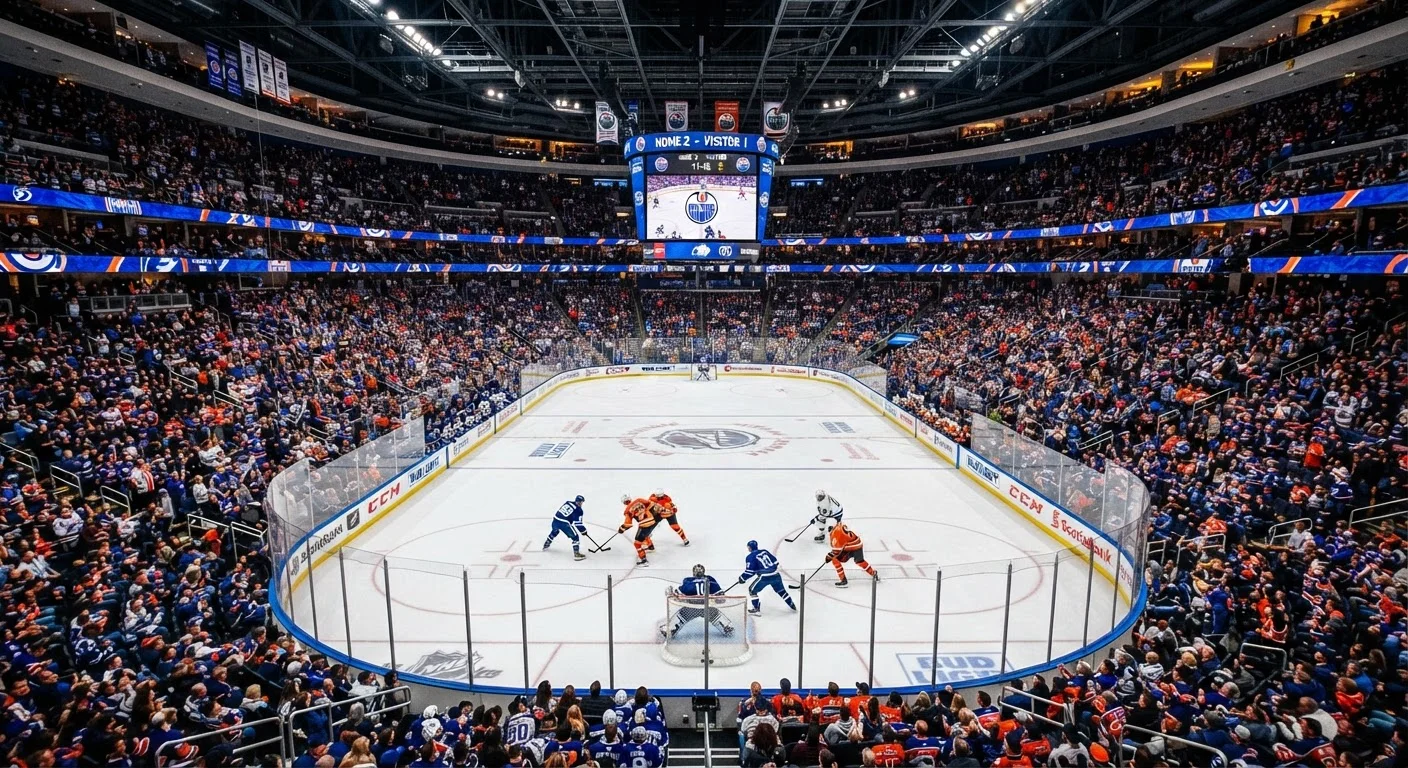
Arena capacities reflect this difference. NHL venues typically seat 17,000 to 21,000 spectators, while AHL arenas commonly hold between 5,000 and 12,000. The smaller setting creates an intimate atmosphere where fans can get closer to the action and, in many cases, interact more directly with players after games.
For those interested in the broader landscape of how competitive sports are organized in America - from grassroots youth programs all the way to professional leagues - understanding the NHL-AHL relationship is one of the clearest examples of how a developmental pipeline operates in practice.
Two-Way Contracts Explained
A two-way contract is an agreement that specifies different salary rates depending on whether a player is in the NHL or the AHL at a given time. These contracts are common for players on the cusp of breaking into the NHL full-time. They give franchises flexibility to develop prospects without committing to a full NHL salary, while still keeping players tied to the organization.
Whether you're a lifelong hockey follower or a newcomer to the sport, both leagues offer compelling reasons to tune in. The NHL delivers elite competition; the AHL delivers development stories, emerging talent, and community-level engagement that is hard to find anywhere else in professional sports.