Why These Terms Get Confused
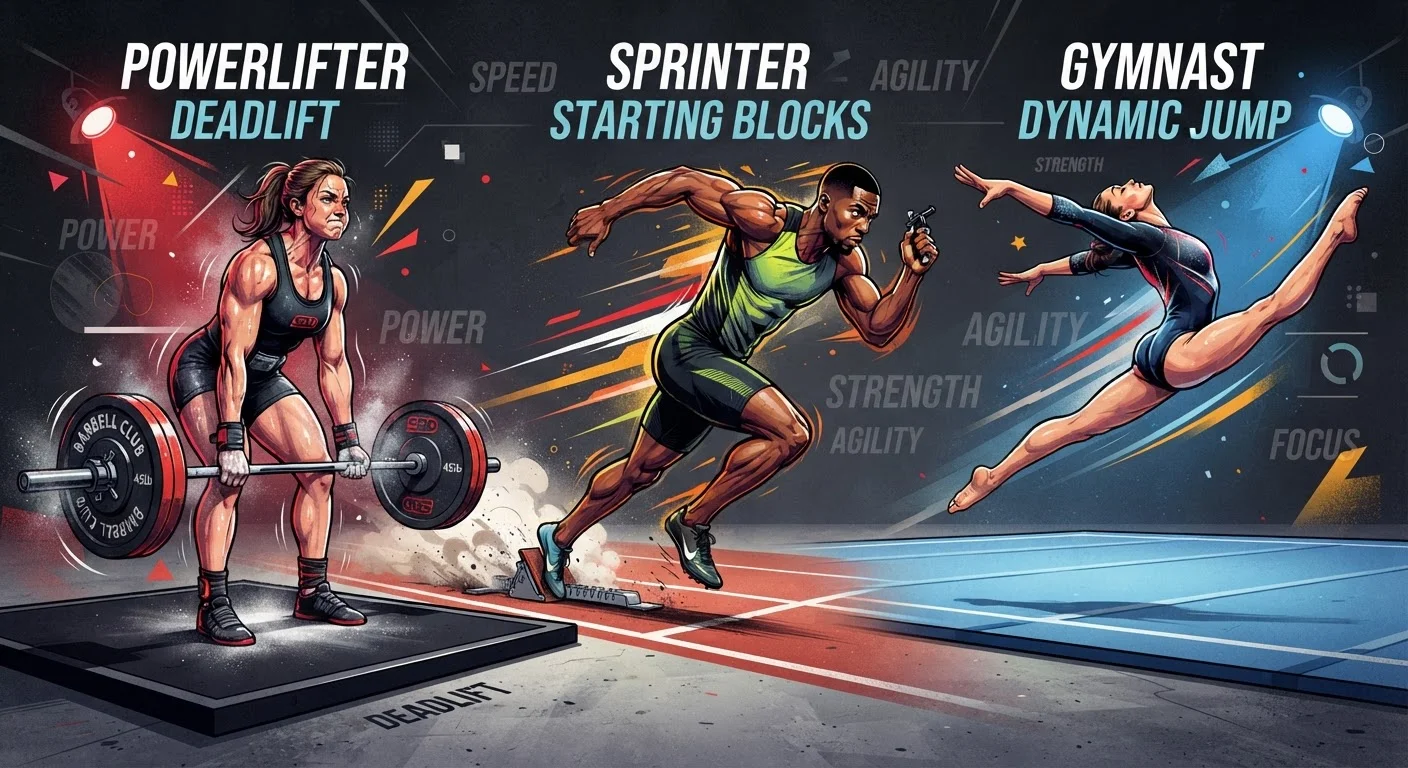
In everyday conversation - and even in some gym settings - strength, power, and speed are treated as synonyms. A sprinter is called "powerful." A weightlifter is described as "fast." The words get shuffled because all three qualities live in the same neighborhood of athletic performance. But in exercise science, each term has a precise meaning, and confusing them leads to training programs that miss the mark.
This isn't purely academic. If a basketball player wants to jump higher, knowing that vertical leap is a power output - not a pure strength or speed measure - changes how they should train. Fitness terminology shapes programming decisions, and imprecise language produces imprecise outcomes.
A Note on Everyday Use of These Words
Outside of sport science contexts, "strength," "power," and "speed" are used loosely and interchangeably - and that's fine in casual conversation. The precision matters most when designing a training program or evaluating athletic performance. Knowing the difference helps you ask better questions and set clearer goals.
Strength: Maximum Force, Full Stop
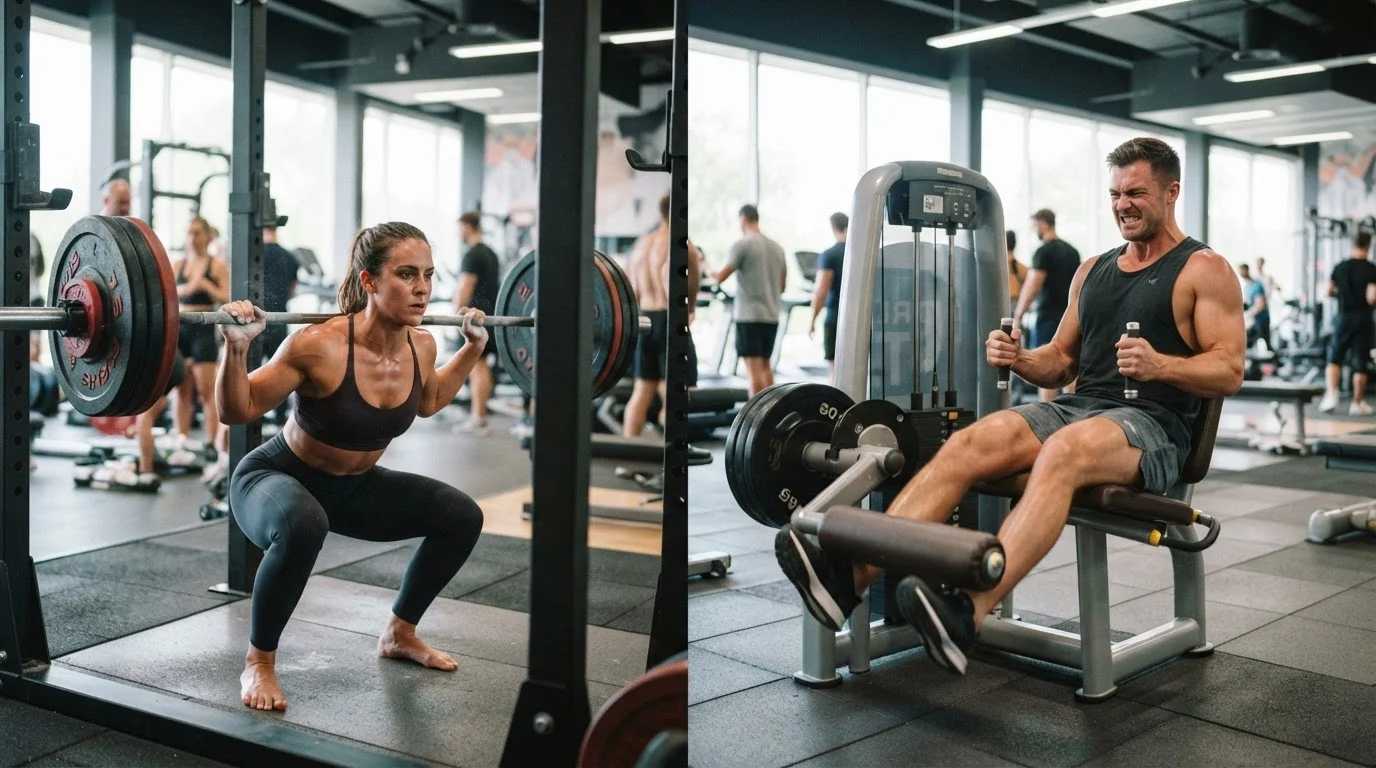
Strength is the capacity of a muscle or muscle group to produce force against an external resistance. The key word is maximum - it refers to the peak force achievable, regardless of how long it takes to get there. A one-repetition maximum (1RM) deadlift is the classic measurement.
Strength improvements come primarily from two sources: increased muscle cross-sectional area (hypertrophy) and improved neural drive - the brain's ability to recruit more motor units simultaneously. Early strength gains in beginners are almost entirely neural, which is why people often get stronger before they visibly get bigger.
What strength does not measure is time. A slow, grinding lift to lockout and a fast clean pull may involve identical force, but they are not the same athletic expression. That distinction is where power enters the picture. See how strength interacts with cardiovascular training in our overview of what strength training and cardio actually do.
Power: Force Meets Velocity
Power is the rate at which work is performed. In biomechanical terms, it equals force multiplied by velocity. This means power is fundamentally a product of two variables - you need muscular force and you need to apply it quickly. Neither alone is sufficient.
This is why an athlete can be very strong but lack elite power. A 500-pound deadlifter who moves the bar slowly is producing enormous force over a relatively long time interval. A 200-pound hang clean performed explosively may generate far more power, even though the load is lighter, because the velocity component is dramatically higher.
Power training typically uses methods like Olympic lifts, plyometrics, and medicine ball throws - movements that force the neuromuscular system to generate high force in short time windows. Understanding anaerobic energy systems is also relevant here, since explosive power efforts rely almost entirely on phosphocreatine and glycolytic pathways.
A competitive powerlifter executes a slow, grinding 550-pound squat to a successful one-rep maximum.
A volleyball player performs a box jump, leaping as high as possible from a standing position.
A wide receiver runs a 4.38-second 40-yard dash at an NFL combine.
A baseball pitcher throws a 95 mph fastball without being particularly large or heavily muscled.
Speed: The Velocity Variable
Speed describes how quickly the body - or a segment of it - moves through space. In linear terms, it's measured as distance divided by time. In sport, it might refer to sprint velocity, bat speed, or throwing arm velocity depending on context.
Unlike strength, speed is less dependent on muscle mass and more dependent on neuromuscular efficiency: the speed at which the nervous system can recruit fast-twitch (Type II) muscle fibers and cycle through contraction-relaxation sequences. This is why elite sprinters are not simply the strongest athletes in the room.
Speed is highly trainable through sprint mechanics work, resisted and assisted sprinting, and neural activation drills. But it requires specificity - general conditioning does not transfer well to maximum-velocity movement. Different sports place very different demands on speed versus strength versus power, which matters for athletes who compete across multiple seasons.
Training Implications: Why Specificity Matters
Once the distinctions are clear, the training application becomes straightforward. Building a strength base is generally the starting point - you cannot produce power from a weak foundation. But strength work alone, particularly slow-tempo lifting, does not develop the high-velocity neural patterns that produce explosive power or raw speed.
Effective athletic programming addresses each quality with targeted methods: heavy compound lifts for strength, explosive movements with moderate loads for power, and sprint or velocity-based work for speed. Periodization - cycling emphasis between these qualities across a training year - is the standard approach used by strength and conditioning coaches at every level of sport.
This article is for general educational purposes and does not constitute personalized training or medical advice. Consult a qualified strength and conditioning professional or healthcare provider before beginning or significantly changing an exercise program.