
What Is Periodization?
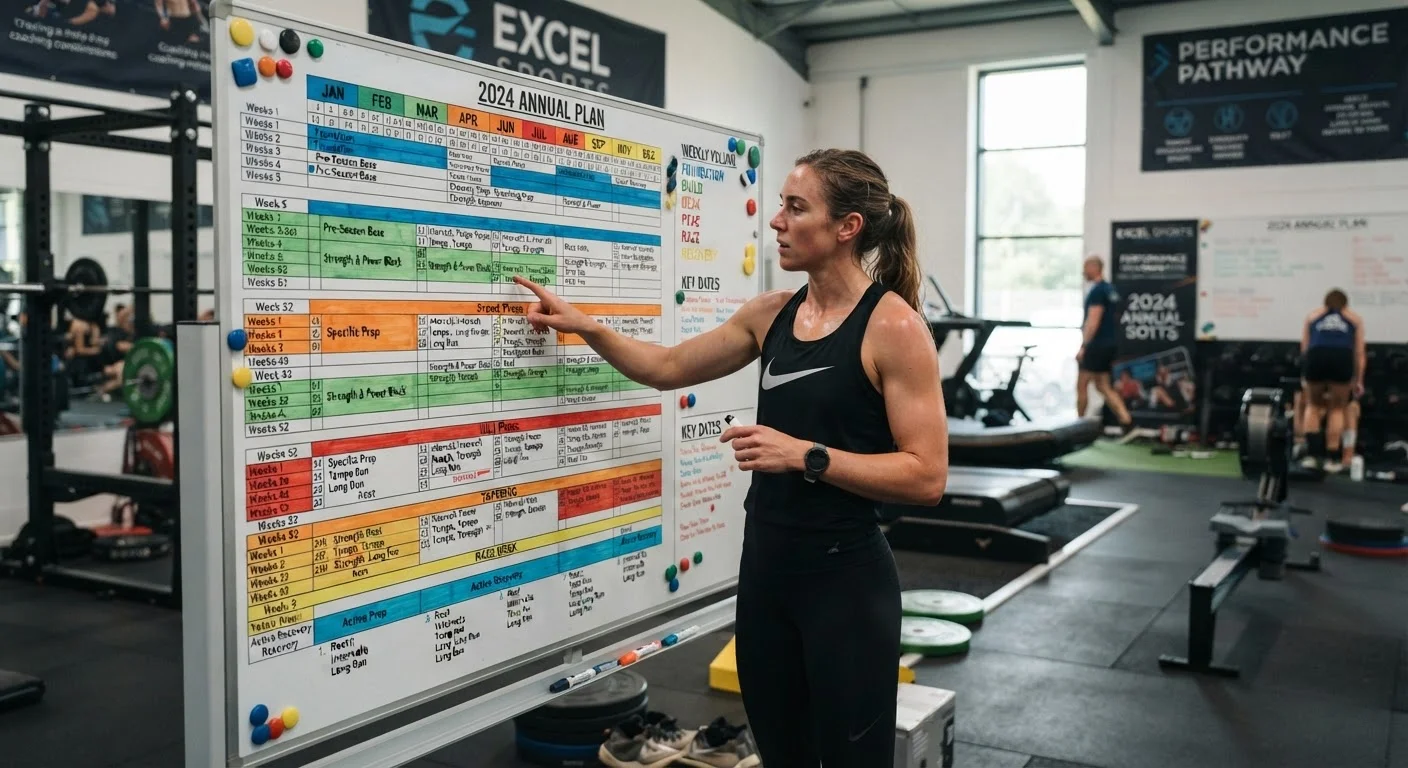
Periodization is the systematic planning of athletic training across time - typically an entire year - to help an athlete reach their highest performance level at the right moment. Rather than training the same way week after week, periodization deliberately varies training volume, intensity, and focus across organized blocks called phases or cycles.
The concept originates from Soviet sports science research in the mid-20th century, particularly from the work of physiologist Leo Matveyev, and has since become a cornerstone of training design in virtually every serious sport. Its central insight is straightforward: the body cannot sustain maximum effort indefinitely, so training must be waved rather than maintained at a constant high load.
Understanding periodization begins with progressive overload - the principle that the body must be incrementally challenged to improve. Periodization is, in many ways, the framework within which progressive overload is intelligently applied and managed over time.
The Core Phases Explained
Most periodization frameworks divide a training year - often called a macrocycle - into three broad phases:
- General Preparation Phase (GPP): This is the foundation-building period. Volume is typically high while intensity is lower. Athletes develop aerobic capacity, foundational strength, mobility, and work capacity. The goal is not to peak here but to build the base that makes peaking possible later. Aerobic and anaerobic energy systems are both developed here, though aerobic work tends to dominate.
- Specific Preparation Phase (SPP): Training shifts toward the demands of the athlete's actual sport or goal. Volume moderates, intensity increases, and exercises become more sport-specific. A powerlifter begins prioritizing competition lifts; a marathon runner shifts from easy long runs to race-pace workouts.
- Competition or Peak Phase: Volume drops significantly, intensity reaches its highest point, and the athlete is primed for peak performance. This phase is deliberately short - the body cannot maintain peak readiness for long.
A fourth phase - the transition or recovery phase - follows competition. This is structured rest that allows full physical and psychological recovery before the next macrocycle begins.
Plan your peak phase backward from your competition or goal date, not forward from today. Most athletes give themselves too little time in the general preparation phase because they start planning too late.
Research consistently shows that a well-developed aerobic and strength base amplifies the gains made in later, higher-intensity phases. Rushing past GPP is one of the most common structural errors in recreational training plans.
When in doubt, keep deload weeks simple: reduce total training volume by roughly 40-50% while maintaining intensity on key sessions. This preserves neuromuscular sharpness while allowing recovery.
Studies on tapering and deload protocols show that maintaining some high-intensity stimulus during recovery periods prevents performance regression while still allowing accumulated fatigue to dissipate.
Popular Periodization Models
Sports scientists and coaches have developed several periodization models, each suited to different athletes and goals:
- Linear (Classical) Periodization
- Volume decreases and intensity increases progressively from phase to phase. Simple and effective for beginners and intermediate athletes building toward a single competition or goal date.
- Undulating (Non-Linear) Periodization
- Volume and intensity vary within the same week or even day-to-day, allowing athletes to develop multiple fitness qualities simultaneously. Often preferred by experienced athletes with complex performance demands.
- Block Periodization
- Training is divided into concentrated blocks, each targeting one or two specific qualities - such as strength, then power, then speed - in sequence. The quality developed in one block supports the next. Widely used in team sports and by athletes competing multiple times per year.
None of these models is universally superior. The right choice depends on the athlete's experience, sport, competition schedule, and recovery capacity. Structuring a training week effectively is where these broader models get translated into daily practice.
How Periodization Prevents Overtraining
One of periodization's most practical benefits is its built-in protection against overtraining - a state of accumulated fatigue where performance declines despite continued effort. Without planned variation, athletes frequently push too hard for too long, leading to stalled progress, increased injury risk, and burnout.
By deliberately programming lighter deload weeks within training blocks and full recovery phases between macrocycles, periodization ensures the body has time to absorb training stress and supercompensate - meaning it rebuilds stronger than before. Recognizing when a training program isn't working is an important skill that becomes far easier when athletes track their responses against a planned structure.
Overtraining Is a Real Risk Without Structure
Athletes who train at uniformly high intensities without planned recovery phases are significantly more vulnerable to overuse injuries, hormonal disruption, and performance plateaus. If you experience persistent fatigue, mood changes, declining performance, or disrupted sleep, these may be signs that your training load has exceeded your recovery capacity. Consult a qualified healthcare or sports medicine professional if symptoms persist.
Tracking key fitness markers over time - such as resting heart rate, performance benchmarks, and perceived effort - helps athletes and coaches identify when recovery is insufficient and adjust accordingly.
Applying Periodization as an Everyday Athlete
You don't need to be a professional athlete or have an elite coach to benefit from periodization principles. The core logic applies equally to a recreational runner, a weekend weightlifter, or a recreational tennis player.
A practical starting point is to identify your primary goal and a target date - a race, a sport season, or a personal milestone - and work backwards. Allocate time for each phase proportionally: more time in the GPP if you're earlier in your development, less if you're already well-conditioned. Plan at least one deload week for every three to four weeks of hard training.
Athletes who play multiple sports across different seasons face a particular challenge, as switching between sports back-to-back places competing physical demands on the body. A periodized approach helps manage those transitions deliberately rather than reactively. For broader lifestyle context, integrating these principles fits naturally into a well-rounded active lifestyle.
Start simply. Even dividing your year into three blocks - build, sharpen, recover - is a meaningful improvement over unplanned training and is consistent with what the science supports.
This article is for general informational and educational purposes only. Consult a qualified sports medicine professional, certified coach, or healthcare provider before beginning or significantly changing any training program, particularly if you have existing health conditions or injuries.