Objects Are Never Just Objects
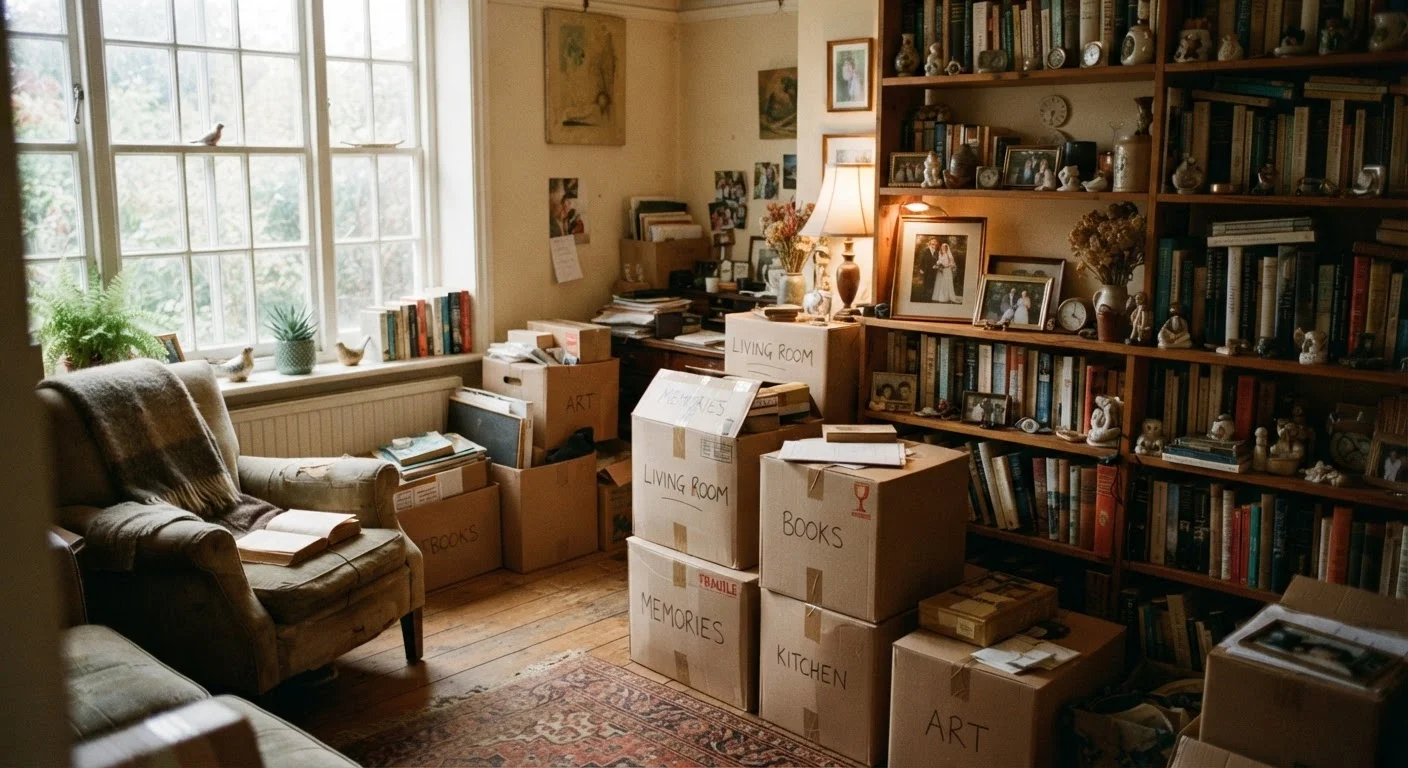
When you pick up an old sweater, a child's artwork, or a gift you've never used, you're rarely evaluating the item on its own merits. You're contending with everything attached to it - the person who gave it, the version of yourself who bought it, or the life you imagined when you did. This is why decluttering can feel emotionally exhausting in a way that sorting through paperwork usually doesn't.
Psychologists recognize that humans routinely transfer meaning onto their possessions. Objects become proxies for relationships, achievements, identity, and even hope. A pair of pants in the wrong size isn't just fabric - it may represent a goal, a period in life, or a quiet sense of obligation to a past self. Discarding it can feel like abandoning that aspiration entirely.
Understanding this mechanism doesn't make decluttering effortless, but it does make the difficulty make sense. The emotional resistance you feel isn't irrational - it's the normal output of a brain doing exactly what it's wired to do.
The Psychology Behind the Pile
Several well-documented psychological patterns explain why possessions accumulate and why releasing them feels so hard.
Loss Aversion and the Endowment Effect
Behavioral research consistently shows that people feel the pain of losing something more acutely than the pleasure of gaining an equivalent thing. When it comes to possessions, this manifests as the endowment effect - the tendency to value something more highly simply because you own it. A mug sitting in your cabinet feels more valuable than an identical mug at a yard sale, even though they are the same object.
Identity and Self-Continuity
We use objects to maintain a sense of who we are and who we've been. Collections, awards, clothes from different life phases, and inherited items all serve as anchors to past identities. Letting them go can feel like erasing part of your personal story - even when that chapter is long closed.
Guilt and Obligation
Many people hold onto gifts out of guilt, even ones they dislike or never use. Discarding a gift can feel like a rejection of the person who gave it. Similarly, expensive items that were rarely used carry a sense of obligation to justify the original purchase by keeping them - a sunk-cost mindset that keeps homes fuller than they need to be.
When Decluttering Triggers Real Distress
If the idea of letting go of objects consistently causes significant anxiety, panic, or paralysis - beyond ordinary sentimentality - that's worth taking seriously. A therapist familiar with anxiety or hoarding-related patterns can provide support that goes beyond organizing strategies. Decluttering is a practical task, but it sits on a psychological foundation, and sometimes that foundation needs attention first.
These patterns are well-recognized enough that professional organizers and therapists often work in tandem. If decluttering consistently triggers significant distress, speaking with a mental health professional is a reasonable and worthwhile step.
The 'Just in Case' and 'Someday' Traps
Two of the most powerful forces keeping clutter in place are hypothetical futures. 'Just in case' thinking leads people to retain items for scenarios that almost never arrive. 'Someday' thinking fills homes with projects, hobbies, and aspirations that remain permanently deferred - a bread maker, a stack of unread books, a half-finished craft kit.
Neither mindset is unreasonable on its own. Planning for contingencies is practical; having interests and goals is healthy. The problem arises when these thought patterns become a default override for every letting-go decision, regardless of actual likelihood or cost of replacement.
A useful internal check: consider when you last used the item and whether it would be genuinely difficult or expensive to replace if the need ever arose. Most 'just in case' items fail both tests.
As you work through these emotional layers, our room-by-room decluttering guide can help you turn the insight into a practical starting point.
Reframing the Act of Letting Go
Decluttering doesn't have to feel like loss. Shifting the frame - even slightly - can lower the emotional stakes enough to move forward.
- Photograph before donating. A digital image preserves the memory without requiring the physical object. Many people find this genuinely satisfying rather than a compromise.
- Give items a destination. Knowing a piece will go to a neighbor, a community organization, or someone who genuinely needs it can turn discarding into giving - a meaningfully different emotional experience.
- Work in sessions, not marathons. Decision fatigue is real. Short, focused sessions preserve the mental clarity needed to make good choices. This is especially true with emotionally charged categories like inherited items or children's belongings.
- Separate the object from the relationship. Remind yourself that a person's memory, your affection for them, and your shared history live in you - not in the item. Keeping an object isn't what keeps the connection alive.
It's also worth recognizing how clutter itself can quietly compound stress. Our piece on why clutter feels so overwhelming explores that dynamic in more depth. And if organizing myths have been shaping your approach, challenging those assumptions is a worthwhile parallel step.
A woman keeps a closet full of her late mother's clothing even though none of it fits her and the items haven't been touched in years.
A homeowner holds onto a barely-used bread maker 'just in case' he gets into baking again, despite not having made bread in six years.
A parent cannot bring herself to donate her adult children's school projects and childhood drawings, even though the children are now in their thirties.
A person keeps a gift from a difficult relationship long after it ended, feeling guilty about the idea of getting rid of it.