Why Soil pH Matters More Than You Might Think
You can water diligently, fertilize regularly, and choose the right sunlight - and still end up with struggling, yellowed plants. Soil pH is often the silent culprit. It acts like a gatekeeper between the nutrients in your soil and your plant's roots.
When pH is outside a plant's preferred range, nutrients become chemically locked in forms the plant cannot absorb. For example, iron and manganese become difficult to access in alkaline soil above pH 7.5, causing leaves to yellow even when those minerals are physically present. In highly acidic soil below pH 5.5, aluminum and manganese can reach levels that are toxic to roots.
Understanding pH isn't about chasing a perfect number - it's about giving your plants a fair chance to use what's already in the ground.
6.0-7.0
Optimal pH range for most vegetable gardens
This range is widely recommended by university extension services across the U.S. as the zone where nutrient availability is most balanced for common food crops.
10×
Acidity increase per unit drop on pH scale
The pH scale is logarithmic, meaning each single-unit decrease represents a tenfold increase in hydrogen ion concentration - small numbers carry big consequences.
4-6 inches
Recommended soil sampling depth for gardens
Cooperative extension guidelines generally recommend sampling from the active root zone - typically 4 to 6 inches deep - for the most meaningful pH reading.
The pH Scale and What the Numbers Mean for Plants
The pH scale runs from 0 (extremely acidic) to 14 (extremely alkaline), with 7.0 as neutral. For gardening purposes, the practical range is usually 4.0 to 9.0, and most cultivated plants perform well between 6.0 and 7.0.
- Strongly acidic (below 5.5): Blueberries, cranberries, and some conifers thrive here. Most vegetables and ornamentals will struggle.
- Mildly acidic (5.5-6.5): A wide range of plants, including most vegetables, roses, and lawn grasses, do well in this zone.
- Neutral to slightly alkaline (6.5-7.5): Many flowering plants, herbs, and root vegetables are comfortable here.
- Strongly alkaline (above 7.5): Naturally suited to plants like lavender and certain native prairie species; challenging for most food crops.
Because the scale is logarithmic, a soil reading of 5.0 is ten times more acidic than 6.0. That's why even modest-looking shifts matter significantly to plant health.
How to Test Your Soil pH at Home
Testing soil pH is straightforward and doesn't require a laboratory. Here are the most common options:
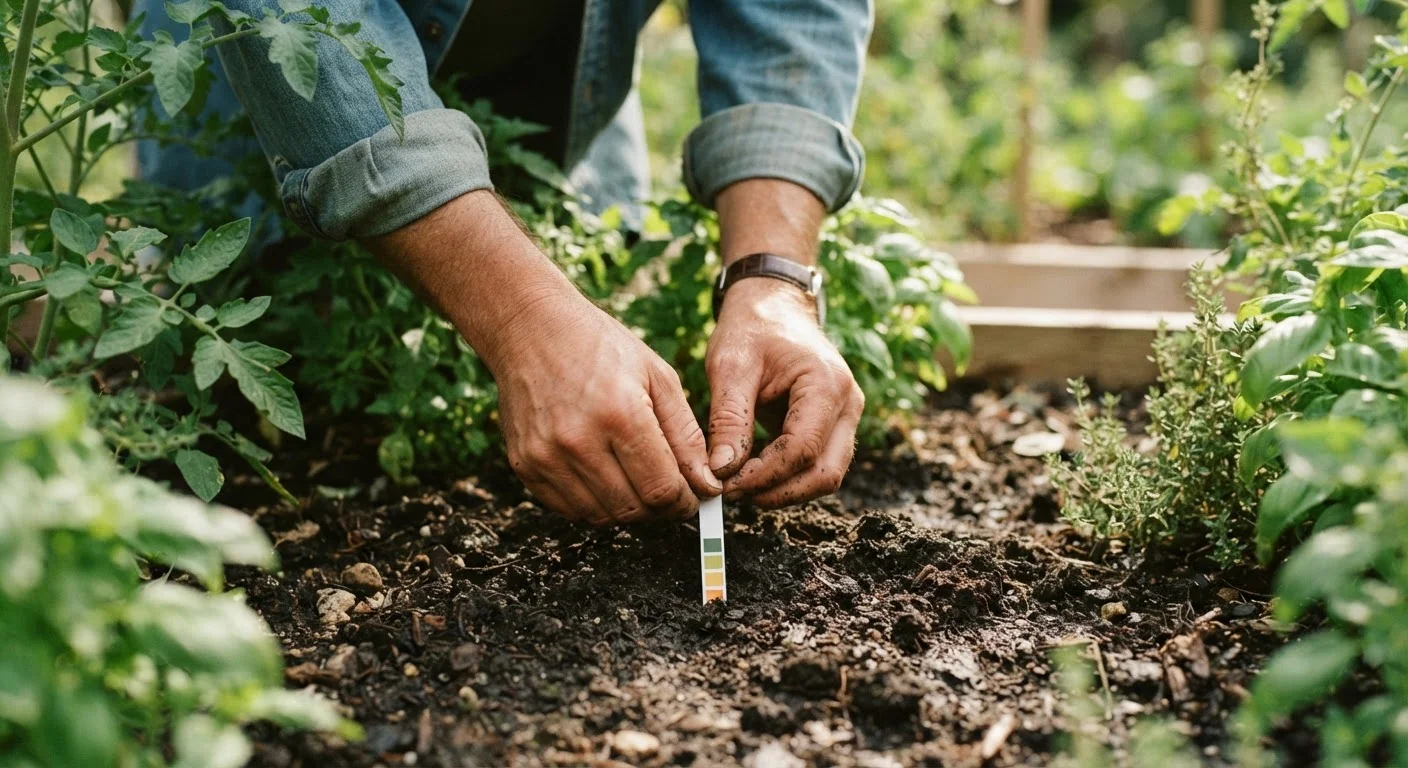
- Soil test kits: These include a small vial, a powder reagent, and a color comparison chart. You mix a soil sample with water and the reagent, then compare the resulting color to the chart. Results take just a few minutes and are reasonably accurate for home use.
- Digital pH meters: Probe-style meters give a numeric reading when inserted into moistened soil. They're reusable and offer more precision than color-comparison kits.
- Cooperative Extension testing: Many state university cooperative extension services offer inexpensive or free soil testing by mail. These lab-based results are highly accurate and often come with amendment recommendations tailored to your specific soil and intended crops.
For best results, collect soil from several spots in your garden at a depth of 4-6 inches, mix them together, and test that blended sample. This gives a more representative reading than a single-spot test.
How to Adjust Soil pH
Once you know your soil's pH, you can take targeted action. Two common amendments cover most situations:
To raise pH (make soil less acidic): Apply agricultural lime - either calcitic or dolomitic limestone. Dolomitic lime also adds magnesium, which can be beneficial in magnesium-deficient soils. Work it into the top several inches of soil and water it in. The amount needed depends on how far off your pH is and your soil type; clay soils need more amendment than sandy soils to shift the same amount.
To lower pH (make soil less alkaline): Elemental sulfur is a slow-acting but effective option. Soil bacteria convert it to sulfuric acid over weeks to months. Acidifying fertilizers and organic matter like composted pine bark or pine needle mulch can contribute to gradual acidification over time.
Always follow general application rate guidelines based on your test results and soil type, and avoid over-amending. Retest after two to three months before applying more.
Practical Habits for Long-Term Soil Health
Soil pH isn't a one-time fix - it shifts with rainfall, plant activity, fertilizer use, and organic matter decomposition. Building a simple annual rhythm helps you stay ahead of problems rather than reacting to yellowing leaves mid-season.
Adding well-finished compost regularly is one of the most reliable ways to gently buffer soil pH and improve nutrient availability across a wide range - compost helps both acidic and alkaline soils trend gradually toward the 6.0-7.0 sweet spot. It also improves soil structure, drainage, and microbial life, all of which support nutrient uptake.
Keep records of your test results and any amendments you apply. A simple garden notebook or phone note that logs dates, readings, and products used gives you a useful trend line over seasons. With that information, you'll be able to manage your soil confidently - and spend less time troubleshooting and more time enjoying what you've grown.