
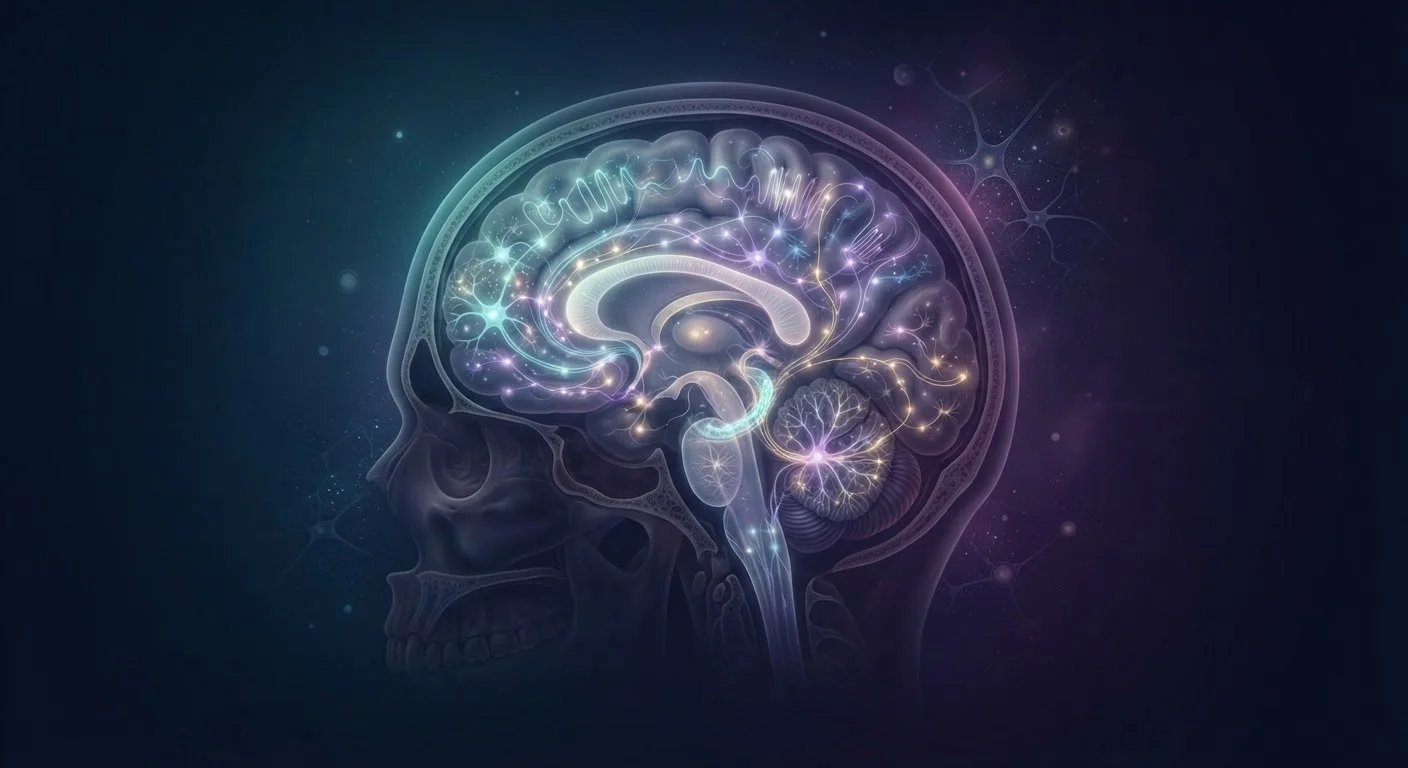
Sleep Is Not Passive
Most people think of sleep as the body simply switching off - a nightly maintenance window when nothing much happens. The biology tells a very different story. From the moment you drift off, your brain enters a precisely choreographed sequence of states, each serving functions that waking life cannot replicate.
Scientists measure sleep using electroencephalography (EEG), which records the brain's electrical patterns. These recordings reveal that the sleeping brain cycles through multiple distinct phases, each with its own wave frequencies, neurochemistry, and biological purpose. Understanding this architecture helps explain why cutting sleep short - even by an hour - carries measurable consequences for memory, mood, immune function, and metabolism.
This article is for general informational purposes only and does not constitute medical advice. If you have concerns about your sleep or health, please consult a qualified healthcare professional.
The Four Stages of Sleep
Sleep science organizes sleep into four stages, grouped into two broad categories: non-REM (NREM) sleep and REM (Rapid Eye Movement) sleep. A complete cycle through all four stages takes roughly 90 minutes, and a healthy night's sleep contains four to six of these cycles.
Stage 1 - Light NREM
This is the transition between wakefulness and sleep. Brain activity slows, muscles relax, and you can be roused easily. It typically lasts just a few minutes.
Stage 2 - Established NREM
Body temperature drops, heart rate slows, and the brain produces bursts of electrical activity called sleep spindles. These spindles are associated with memory consolidation. Stage 2 makes up the largest share of total sleep time - roughly 50%.
Stage 3 - Deep Slow-Wave Sleep (SWS)
The brain generates slow, high-amplitude delta waves. This is the hardest stage to wake from, and it is when the body does its most intensive physical repair work. Growth hormone is released in large pulses during this stage. Early-night cycles are dominated by SWS.
Stage 4 - REM Sleep
The brain becomes nearly as active as during wakefulness. Voluntary muscles are temporarily paralyzed - a mechanism that prevents acting out dreams. REM sleep is central to emotional processing, creativity, and the consolidation of complex memories. REM periods grow longer as the night progresses, making the final hours of sleep disproportionately important for cognitive function.
Protect your final two hours of sleep as carefully as your first. REM periods lengthen toward morning, so early alarms disproportionately cut the sleep stage most critical for memory and emotional regulation.
Sleep cycle timing means REM dominates the latter portion of the night; truncating sleep before a natural wake time reliably reduces REM exposure.
If you wake in the night and can't return to sleep within 20 minutes, leave the bed and do something calm in dim light before returning. Staying in bed awake trains the brain to associate the bed with wakefulness.
This approach, known as stimulus control, is a core component of Cognitive Behavioral Therapy for Insomnia (CBT-I), which clinical research consistently shows to be effective.
What the Brain Does While You Sleep
One of the most significant neuroscience discoveries of recent decades involves the brain's glymphatic system - a network of fluid-filled channels that expands during sleep and flushes out metabolic waste products, including proteins linked to neurodegenerative diseases. This clearing process is far less active during waking hours, which is why chronic sleep deprivation is an area of ongoing neuroscientific interest.
Memory consolidation is equally important. During Stage 2 and slow-wave sleep, the hippocampus - a brain region central to forming new memories - replays recent experiences and transfers them to the cortex for long-term storage. REM sleep then appears to strengthen emotional associations and integrate new knowledge with existing understanding, a process researchers sometimes describe as "offline learning."
If you've ever found that a problem seemed clearer after sleeping on it, this is the biology behind that experience. It's also one reason that reading before bed may influence what you actually retain from what you've read.
How the Body Repairs Itself Overnight
Physical restoration during sleep is extensive and systematic. The pituitary gland releases human growth hormone (HGH) predominantly during deep NREM sleep, driving tissue repair, muscle protein synthesis, and bone maintenance. The immune system also ramps up during sleep, producing and deploying cytokines - signaling proteins that help coordinate immune responses.
Cardiovascular activity shifts markedly: heart rate and blood pressure drop during NREM sleep, giving the heart a meaningful period of reduced demand. Researchers have observed that people who consistently sleep fewer than six hours per night tend to show higher average blood pressure and elevated inflammatory markers, though individual variation is significant.
The body's hormonal profile also resets overnight. Cortisol - the primary stress hormone - follows a circadian rhythm that brings it to its lowest point in the early hours of sleep before rising toward waking. Disrupting this rhythm through irregular sleep timing can blunt the natural cortisol decline and compromise the restorative period.
What Disrupts Healthy Sleep Architecture
Several common behaviors interfere directly with sleep staging in ways many people don't realize.
- Alcohol: Though it can hasten sleep onset, alcohol suppresses REM sleep in the first half of the night, fragmenting later sleep cycles as it metabolizes. The net effect is less restorative sleep, even after a full eight hours in bed.
- Blue-spectrum artificial light: Light in the blue wavelength range - abundant in phones, tablets, and LED screens - suppresses melatonin secretion from the pineal gland. Melatonin is a key signal that advances the biological clock toward sleep. Exposure in the hour before bed delays sleep onset.
- Inconsistent sleep timing: The body's circadian rhythm - a roughly 24-hour internal clock governed by the suprachiasmatic nucleus in the hypothalamus - functions best with regularity. Shifting sleep and wake times significantly on weekends (sometimes called "social jet lag") disrupts this rhythm in measurable ways.
- Caffeine: As an adenosine receptor antagonist, caffeine blocks the accumulation of adenosine, a chemical that builds sleep pressure across the day. Its half-life of roughly five to seven hours means an afternoon cup meaningfully reduces deep sleep.
Supporting Better Sleep: What the Science Actually Supports
Sleep science supports a relatively consistent set of environmental and behavioral factors for maintaining healthy sleep architecture - none of them requiring supplements or devices.
Sleep timing consistency is among the most evidence-backed approaches. Anchoring your wake time to the same hour daily, including weekends, stabilizes circadian rhythm more reliably than any other single behavior. Cool bedroom temperature (generally in the range of 65-68°F / 18-20°C for most adults) aligns with the body's natural temperature drop that cues sleep onset, though individual comfort varies.
Light management - bright light exposure in the morning and reduced light in the evening - helps calibrate the circadian clock efficiently. And while winding down with reading has long been a popular pre-sleep habit, the type of reading and timing can influence both sleep quality and how much you retain. Our related article explores when to read for best focus and retention if you want to go deeper on that question.
Sleep disorders such as insomnia, sleep apnea, and restless legs syndrome require evaluation by a qualified healthcare professional - behavioral strategies alone are insufficient for clinical conditions, and proper diagnosis changes the approach entirely.
This article provides general educational information about sleep biology and is not a substitute for personalized medical advice. Consult a licensed healthcare provider if you have concerns about your sleep health.