The Four Forces Every Pilot Knows
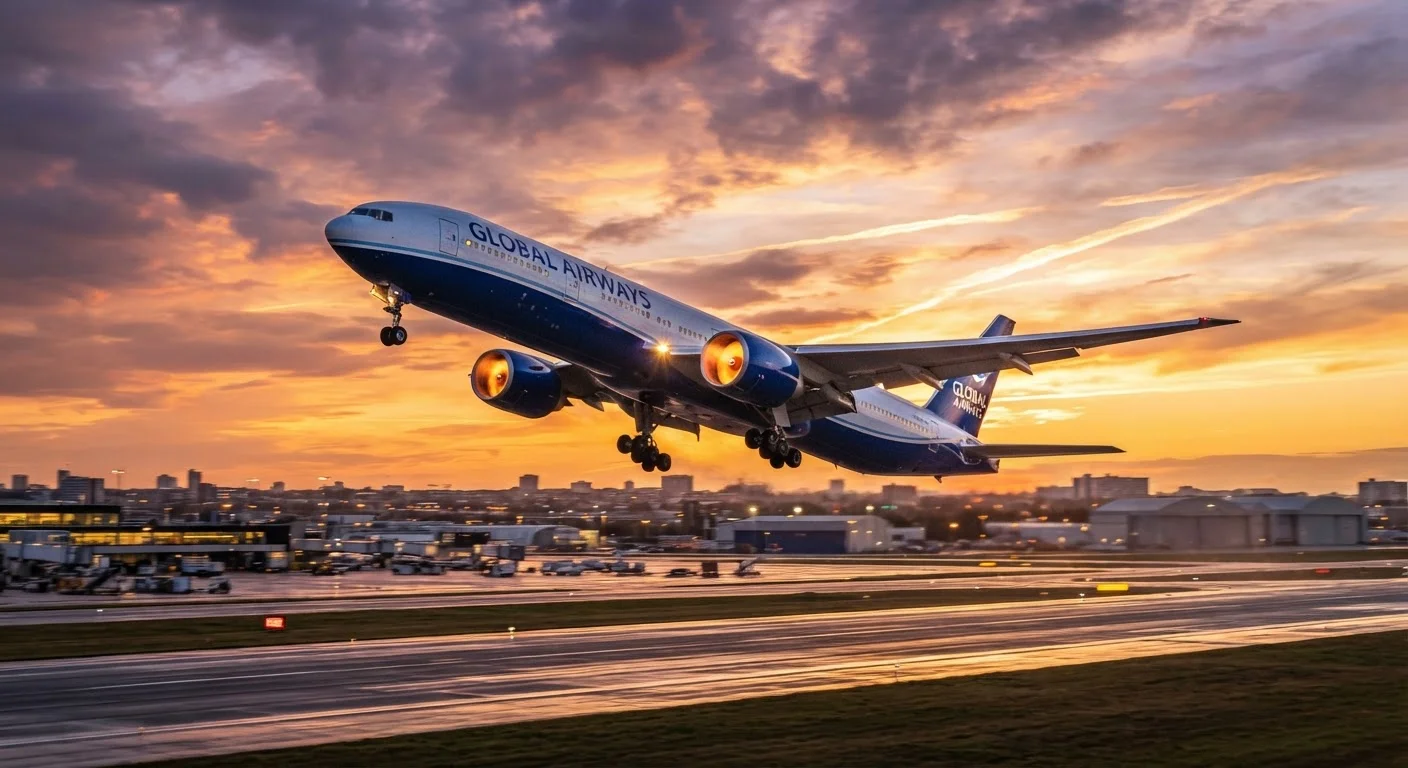
Every time a commercial airliner lifts off the runway, the same four forces are at work: lift, weight, thrust, and drag. These aren't pilot jargon - they're the direct application of physics principles that have been understood for over a century.
Weight is straightforward: gravity pulls the entire aircraft - fuel, passengers, cargo, and airframe - toward the ground. Thrust is the forward force produced by jet engines or propellers. The interesting physics lies in the other two. Lift is what gets the plane airborne, and drag is the invisible wall the plane must constantly push through. Understanding how lift and drag are actually generated clears up some surprisingly common misconceptions about flight.
How Wings Actually Generate Lift
The most common explanation taught in schools goes like this: a wing's curved upper surface forces air to travel a longer path than air beneath the wing, so it must move faster, and faster-moving air has lower pressure. The higher pressure below pushes the wing upward. This is Bernoulli's principle - and it's real, but incomplete.
The fuller picture requires Newton's third law. A wing is angled slightly upward relative to the oncoming airflow - this angle is called the angle of attack. As air meets the wing, it's deflected downward. By Newton's third law, the wing (and the plane attached to it) gets pushed upward with equal force. This reaction force accounts for a substantial share of total lift, particularly at lower speeds and higher angles of attack.
Wing shape - known as an airfoil - is engineered to optimize both effects. The slight downward curve of the trailing edge, the rounded leading edge, and the asymmetric cross-section all work together to redirect airflow in a way that maximizes upward force while minimizing energy loss.
“The airplane stays up because it doesn't have the time to fall. Aerodynamics is the science of explaining why this works.”
— Orville Wright, Co-inventor of the first successful powered airplane
Drag: The Unavoidable Cost of Flying
Generating lift is never free. Every time a wing deflects air downward to produce lift, it creates a byproduct called induced drag - the aerodynamic penalty of redirecting airflow. The more lift a wing produces, the more induced drag results. This is why drag is highest during takeoff and low-speed flight, when wings work hardest.
There's a second type called parasitic drag, which is the resistance caused by the aircraft's physical bulk moving through air - the fuselage, landing gear, antennas, and any surface that isn't aerodynamically smooth. Engineers reduce parasitic drag by streamlining shapes and retracting landing gear once the plane is airborne.
During takeoff roll, engines must accelerate the plane to rotation speed - the minimum speed at which the wings generate enough lift to exceed the aircraft's weight. Before that speed is reached, no amount of wing angle will get the plane off the ground.
When the Forces Reach Equilibrium
Takeoff ends and cruise begins the moment pilots find the four-force balance point. At cruise altitude, thrust is dialed back to exactly match drag, and the wings are producing just enough lift to equal the plane's weight. The aircraft neither climbs nor descends - it travels in a straight, level line at consistent speed.
This balance is constantly shifting. As fuel burns off, the plane becomes lighter, requiring less lift. Air density decreases with altitude, reducing both lift efficiency and engine output. Pilots and flight management computers are continuously making micro-adjustments to maintain that equilibrium across thousands of miles.
Watch Lift in Action on Your Next Flight
If you're seated over the wing, watch the leading edge slats and trailing edge flaps extend during takeoff. These moveable surfaces increase the wing's curvature and effective angle of attack, generating extra lift at lower speeds. Once the plane reaches cruise altitude, they retract to reduce drag for efficient level flight.
The physics playing out at 35,000 feet are the same ones that govern a paper airplane thrown across a room - just scaled by a factor of millions. Understanding lift and drag doesn't just explain aviation; it illuminates the physics of birds, race cars, bicycle helmets, and anything else that moves through air.