Earth's Restless Outer Shell
Picture Earth's outer layer not as one solid shell but as a cracked eggshell made up of roughly 15 to 20 large pieces called tectonic plates. These plates - each between 60 and 200 miles thick - float on a layer of partially molten rock called the mantle, which churns slowly due to heat rising from Earth's interior.
That slow churning drives the plates to move, though at a pace measured in inches per year - roughly the speed your fingernails grow. Over millions of years, this motion has shaped every continent, mountain range, and ocean basin on the planet. Where plates interact, forces build - and those forces eventually have to go somewhere.
~500,000
Earthquakes detected globally each year
The USGS estimates roughly 500,000 detectable earthquakes occur worldwide annually; about 100,000 are felt by people.
80%
Of major earthquakes along the Ring of Fire
The Pacific Ring of Fire accounts for approximately 80% of the world's largest earthquakes, according to USGS data.
32×
Energy increase per magnitude unit
Each whole-number increase on the moment magnitude scale represents approximately 32 times more energy released at the source.
Faults: Where the Action Happens
The boundaries where tectonic plates meet are called fault lines. Three basic types of plate interaction produce different kinds of earthquakes:
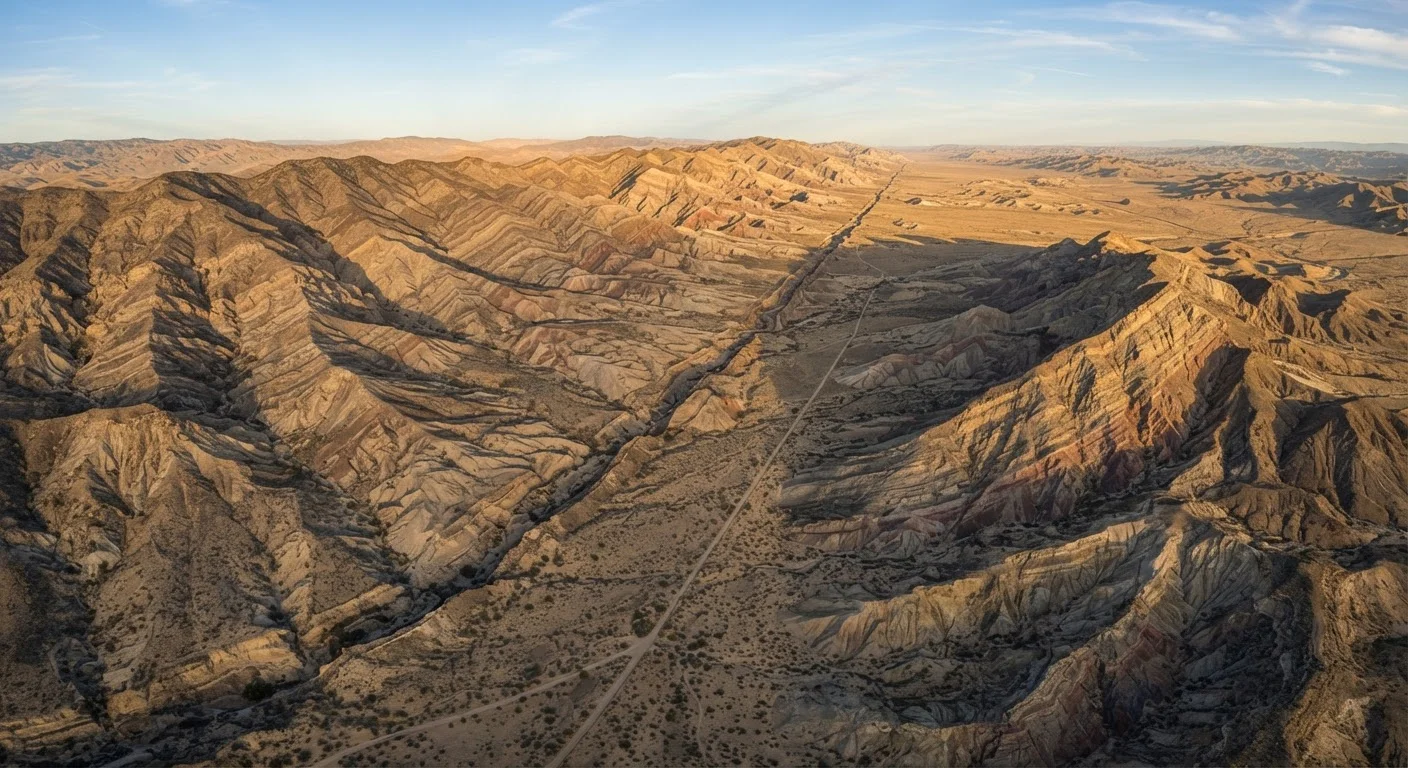
- Transform boundaries: Two plates slide horizontally past each other, like the San Andreas Fault in California. The grinding motion locks the plates together - until stress overcomes friction and the plates lurch forward.
- Convergent boundaries: Two plates collide. One may dive beneath the other in a process called subduction, which produces some of the world's most powerful earthquakes. The Pacific Northwest's Cascadia Subduction Zone is a well-studied example.
- Divergent boundaries: Plates pull apart, allowing magma to well up and form new crust. These earthquakes tend to be shallower and less intense, though they can still cause damage.
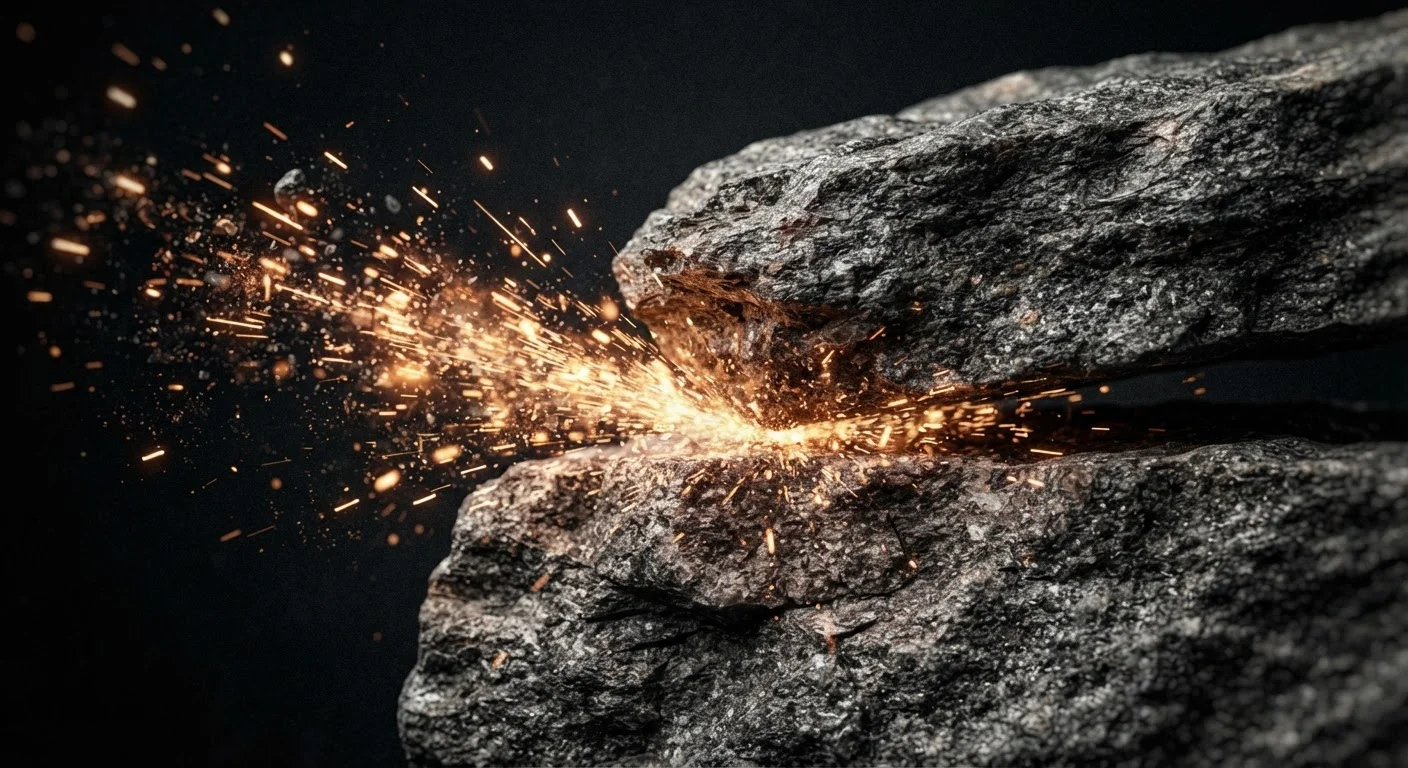
Along any of these fault types, rock on either side can become locked. Stress accumulates over decades or even centuries - then releases all at once in a rupture that sends energy racing outward through the ground.
From Rupture to Shaking: How Seismic Waves Work
When a fault ruptures, it releases energy in the form of seismic waves - vibrations that travel through Earth much like ripples spread across water. There are two main categories:
- Body waves travel through Earth's interior. Primary waves (P-waves) compress and expand rock as they move and arrive first. Secondary waves (S-waves) shake rock side to side and cause most of the destructive shaking.
- Surface waves travel along Earth's crust and tend to cause the longest, most damaging motion felt at the surface.
What people experience - swaying buildings, rattling shelves, rolling ground - is the combined effect of these waves arriving in sequence. Loose or water-saturated soils amplify shaking significantly compared to solid bedrock, which is why building location matters as much as earthquake magnitude when assessing risk.
Other Triggers: Volcanoes and Human Activity
While plate tectonics explains the overwhelming majority of earthquakes, two other sources deserve mention. Volcanic earthquakes occur when magma forces its way through rock, fracturing it from below - a pattern seismologists monitor closely as an early warning sign of volcanic unrest.
Induced seismicity - earthquakes triggered by human activity - has grown as a recognized concern, particularly in the central United States. Studies by the U.S. Geological Survey have linked thousands of small earthquakes to the deep injection of wastewater produced during oil and gas extraction. Though most induced earthquakes are minor, some have exceeded magnitude 5.0, enough to cause structural damage.
Understanding these secondary causes matters for both hazard assessment and infrastructure planning, especially as energy development continues in seismically sensitive regions.