
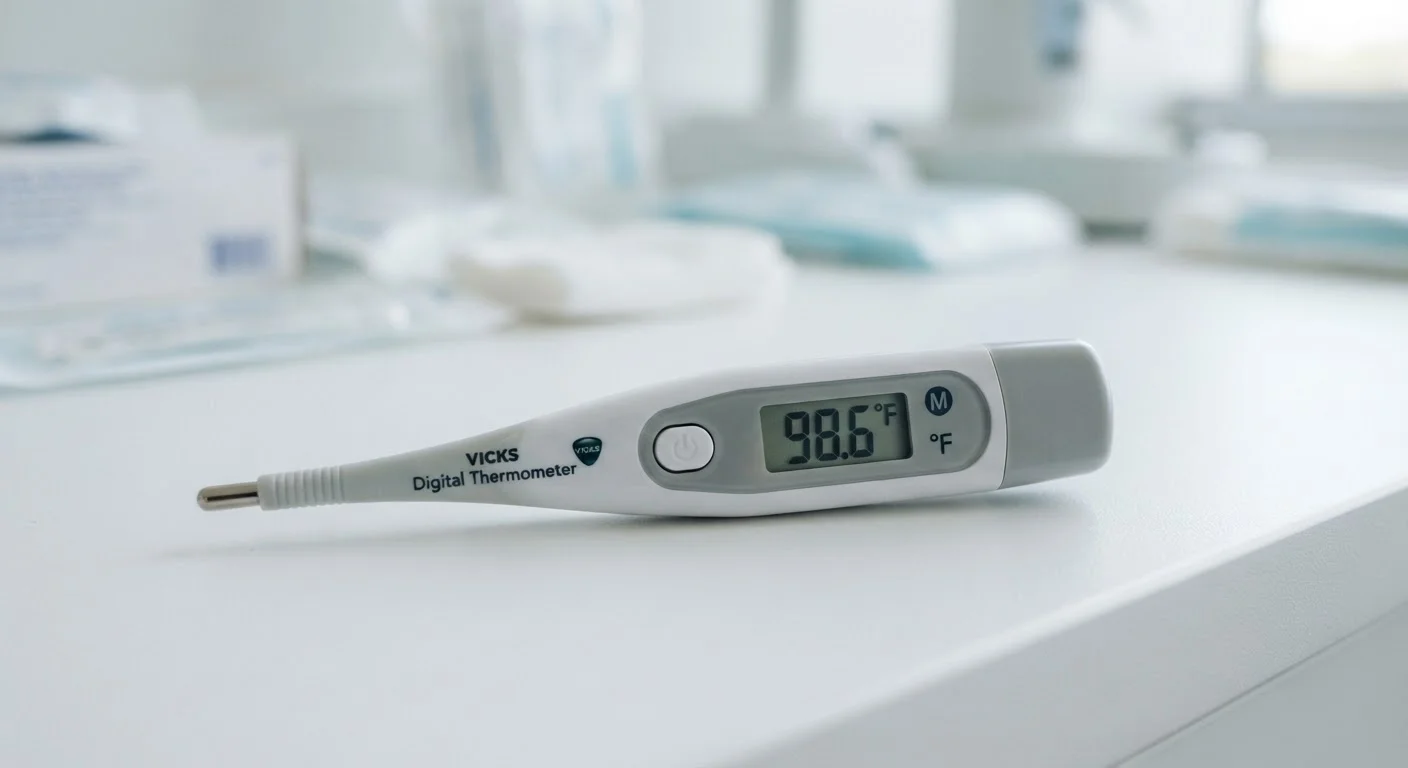
Where 98.6°F Came From - and Why It's Misleading
The number 98.6°F (37°C) traces back to a single 19th-century German physician named Carl Wunderlich, who analyzed axillary (armpit) temperature readings from roughly 25,000 patients in the 1850s and declared this the human norm. The figure stuck - in medical textbooks, household thermometers, and public imagination alike.
The problem is that Wunderlich's methodology would never pass modern scientific scrutiny. His thermometers were long, non-standardized, and readings were taken over extended periods. More importantly, a single average drawn from one population at one moment in history was never meant to function as a universal cutoff for health or illness.
A landmark 2020 study published in eLife analyzed temperature data from three distinct historical cohorts spanning nearly 160 years and found a measurable downward trend in average body temperature - suggesting that humans today run slightly cooler than people did in the 1800s, possibly due to reduced chronic infection rates and changes in metabolic activity. The modern average is now estimated to be closer to 97.9°F (36.6°C).
Myth
Everyone's normal body temperature is exactly 98.6°F, and anything different signals a problem.
Fact
Normal body temperature varies by individual, typically ranging from about 97°F to 99°F, and 98.6°F is simply a historical population average.
The 98.6°F figure was never intended as an individual standard. Population averages describe the center of a distribution - many healthy people sit well above or below it. Treating it as a hard threshold leads to unnecessary worry for those who run naturally cooler, and false reassurance for those whose elevated reading still falls below 98.6°F.
Myth
A fever begins the moment your thermometer reads above 98.6°F.
Fact
Clinicians define fever as a core body temperature of 100.4°F (38°C) or higher, not any reading above the textbook average.
This distinction matters enormously in clinical settings. A temperature of 99.1°F in an otherwise healthy adult is almost never cause for alarm. Fever thresholds used by healthcare providers are grounded in research on when the immune system's heat response becomes physiologically significant - not on Wunderlich's 19th-century average.
Myth
Your body temperature stays constant throughout the day.
Fact
Body temperature follows a circadian pattern, typically lowest in the early morning hours and peaking in the late afternoon or early evening.
This daily swing can amount to nearly 1°F in healthy adults. Taking a temperature at 6 a.m. versus 5 p.m. can produce meaningfully different readings even when a person is in perfect health. Clinicians account for this variation when interpreting results - the time of measurement is relevant clinical context.
Myth
If your temperature is 98.6°F, you definitely don't have a fever.
Fact
For individuals whose personal baseline is significantly lower than 98.6°F, a reading at or near that figure could represent a genuine fever response.
Fever is fundamentally a deviation from an individual's normal - not a fixed crossing of 98.6°F. Someone whose baseline runs at 97.2°F experiencing a reading of 98.8°F has technically elevated more than 1.5°F above their norm, which may be medically relevant. This is one reason physicians value knowing a patient's typical resting temperature, not just a single snapshot.
Myth
All thermometers give the same reading, so it doesn't matter how you take the temperature.
Fact
Measurement site significantly affects the result - rectal readings are consistently higher than oral, which are higher than axillary.
These are not errors or malfunctions - they reflect genuine differences in what each site measures. Rectal temperature most closely approximates core body temperature, while axillary readings are more influenced by ambient conditions. Healthcare providers interpret each measurement against site-specific reference ranges, not a single universal number.
How Temperature Actually Varies - and What That Means for You
Your body temperature is not a static number. It fluctuates predictably throughout the day, typically rising by up to 1°F between early morning and late afternoon - a pattern driven by your circadian rhythm. Physical activity, eating, emotional stress, hormonal cycles, and ambient environment all push readings up or down.
~1°F
Daily temperature swing in healthy adults
Research consistently documents a circadian rise and fall of roughly 1°F between early morning lows and afternoon peaks in healthy individuals.
97°F-99°F
Typical normal range for healthy adults
Medical references broadly define the normal adult range as approximately 97°F to 99°F, reflecting genuine individual variation.
97.9°F
Estimated modern average body temperature
A 2020 study in eLife estimated the current average closer to 97.9°F, lower than Wunderlich's 19th-century figure of 98.6°F.
Age matters, too. Older adults tend to run cooler on average, which is why a temperature that seems unremarkable in a younger person could indicate a meaningful change in someone elderly. Infants and young children, by contrast, tend to have slightly higher baseline temperatures. Biological sex also plays a role - research has found that women generally have slightly higher core temperatures than men, with additional variation tied to the menstrual cycle.
Where you take the temperature changes the number as well. Rectal readings run approximately 0.5-1°F higher than oral readings, while axillary (armpit) readings run about 0.5-1°F lower. Tympanic (ear) and temporal artery readings fall in the mid-range but can vary with technique. Clinicians interpret each measurement site differently - a number without its method is only half the information.
The clinical definition of fever - generally accepted as 100.4°F (38°C) or higher for an oral reading - does not move just because a patient's baseline is lower than 98.6°F. If your personal normal is 97.4°F, a reading of 99.8°F may represent a meaningful physiological response worth monitoring, even though it falls below the textbook fever threshold. This is why tracking your own baseline over time has real practical value.
This article is for general informational and educational purposes only and is not a substitute for professional medical advice. If you have concerns about fever, illness, or any health condition, consult a qualified healthcare provider.