
More Than a Backup System
Most people can name the circulatory system or the nervous system when asked about the body's major networks. The lymphatic system rarely gets the same recognition - yet it is fundamental to staying healthy. It runs alongside blood vessels in nearly every part of the body, performing functions that no other system can replace.
At its core, the lymphatic system solves a persistent problem in physiology: blood capillaries constantly leak a small amount of fluid into surrounding tissues. Left uncollected, this fluid would accumulate and cause dangerous swelling. Lymphatic vessels pick up this fluid - now called lymph - filter it through lymph nodes, and return it to the bloodstream near the heart. It is a continuous, largely invisible process that keeps tissues in balance.
The system also has a second job that is arguably even more important: serving as the expressway of the immune response.
How Lymph Fluid Moves Through the Body
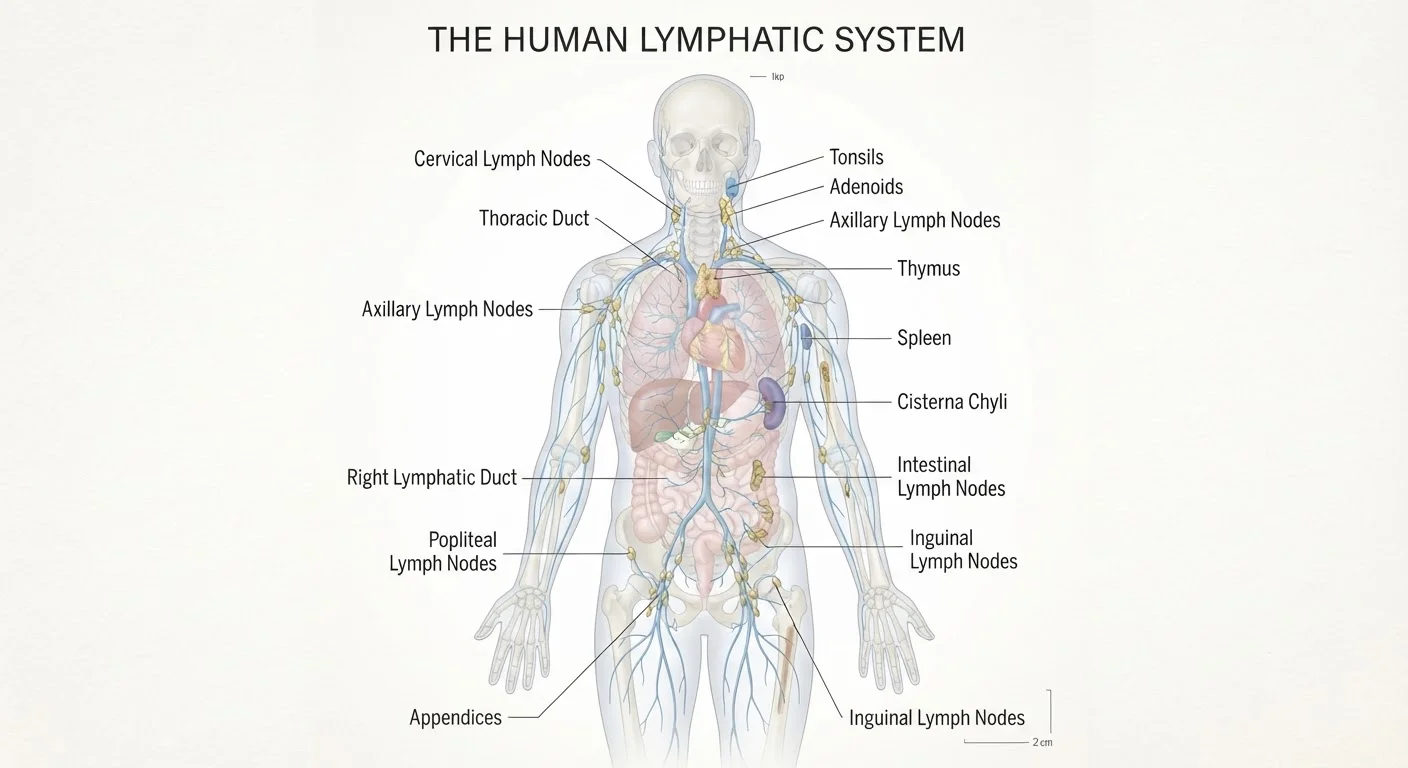
Lymph enters the network through tiny, thin-walled capillaries that begin in the spaces between cells. These feed into progressively larger lymphatic vessels, which eventually drain into two main ducts near the base of the neck, emptying into veins that carry blood to the heart.
The challenge is that there is no heart-equivalent to pump lymph. Instead, the fluid moves through a combination of mechanisms: smooth muscle contractions in the vessel walls, skeletal muscle activity during movement, pressure changes caused by breathing, and one-way valves inside the vessels that prevent backflow. This is why prolonged sitting can contribute to puffiness in the legs - movement is genuinely necessary for the system to function well.
~600
Lymph nodes in the human body
According to anatomical studies, the human body contains approximately 600 lymph nodes, though estimates vary depending on individual physiology.
2-3 L
Lymph fluid returned to bloodstream daily
Physiological research indicates the lymphatic system returns roughly 2-3 liters of fluid to the bloodstream each day under normal conditions.
~1%
Of US cancer survivors affected by lymphedema
The National Cancer Institute has estimated that lymphedema affects a meaningful proportion of cancer survivors, particularly those who have undergone lymph node removal or radiation.
Along the way, lymph passes through hundreds of lymph nodes - small, bean-shaped structures that act as biological checkpoints. Inside each node, immune cells called lymphocytes and macrophages scan the fluid for pathogens, damaged cells, and foreign particles, neutralizing threats before they can spread further.
The Organs That Power Immune Defense
Beyond the vessels and nodes, several dedicated organs are central to how the lymphatic system operates.
- Spleen: The largest lymphatic organ, located in the upper left abdomen. It filters blood rather than lymph, removing old or damaged red blood cells and mounting immune responses to blood-borne pathogens.
- Thymus: A gland behind the breastbone that is most active during childhood. It is where T lymphocytes - a class of immune cell - mature and are trained to distinguish the body's own cells from foreign invaders.
- Tonsils and adenoids: Clusters of lymphatic tissue in the throat and nasal passages that intercept pathogens entering through the mouth and nose.
- Bone marrow: The site where all blood cells, including lymphocytes, are produced. B lymphocytes also mature here before being released into circulation.
Together, these organs form an integrated system capable of identifying and responding to an enormous range of biological threats.
When the Lymphatic System Struggles
The most visible sign that something is wrong with the lymphatic system is swollen lymph nodes - a familiar experience during a cold or throat infection. In most cases, swelling resolves as the infection clears. Persistent or unexplained swelling in lymph nodes, however, warrants medical evaluation, as it can sometimes indicate more serious conditions including certain cancers.
A more chronic condition called lymphedema occurs when lymphatic vessels are damaged, blocked, or surgically removed. Fluid accumulates in tissues, typically in a limb, causing persistent swelling that can be painful and limit mobility. It is a recognized complication of some cancer treatments and can also arise from infections in regions where certain parasitic diseases are common. Management focuses on reducing swelling and preventing complications; anyone experiencing unexplained limb swelling should consult a healthcare professional.
Support Your Lymphatic System With Movement
Because the lymphatic system lacks a central pump, regular physical activity is one of the most practical ways to keep lymph flowing efficiently. Even moderate daily movement - walking, stretching, or deep breathing exercises - contributes to healthy lymphatic circulation. This is general wellness information; for specific health concerns related to the lymphatic system, consult a healthcare provider.
Understanding the lymphatic system matters because it connects immunity, fluid balance, and even fat absorption in the digestive system into a single, coordinated network - one that works best when the whole body is active and healthy.
This article is for general informational and educational purposes only and does not constitute medical advice. Always consult a qualified healthcare professional for personal health concerns.